

NEW! Click Here to Download our Free Chiminea (and Fire bowl) Buyers Guide.
Frequently Asked Questions and Answers about Chiminea’s and fire pits
There’s always someone on hand to answer your questions. We pride ourselves on our legendary customer service. But first, take a look at these FAQ to see if we’ve already answered your query. I not, just give us a call and we’ll spring into action on your behalf with sensible, clear answers and common sense advice.
Do you deliver outside mainland Britain?
No, we can’t deliver outside mainland UK. This means we don’t deliver to Northern Ireland, Eire or any international destination.
How do I choose a chiminea?
There are a lot of things to consider when buying a chiminea. If you’re looking for a new chiminea to replace an old or damaged model you’ll have a good idea of what you’re looking for, but it’s still a good idea to look at all the options before making a decision because there are often exciting new designs and models available.
What size chiminea do I need?
Chimineas come in all shapes and sizes. If you have a large garden or patio, why not try an extra large chiminea? Even a large chiminea will be perfectly at home in a medium-to-large garden. If you just want to brighten up a corner of your patio, why not think about a small chiminea?
Whichever size you decide to go for, just make sure it’s clear of any overhanging greenery or awnings and that you have a firm, level, fire-resistant surface to put it on. If you’re putting your chiminea on decking or another type of wood surface, we sell a handy floor protector to prevent sparks damaging the wood.
Cast iron, steel or clay chiminea – Which is best?
Which material should you choose? Cast iron, steel or clay? They all have their advantages and disadvantages. Just bear in mind that chimineas can be extremely heavy. If you’re concerned about mobility, a steel chiminea might be your best option.
-
Cast iron chimineas
– sturdy, durable and an excellent conductor of heat, cast iron chimineas perform excellently as patio heaters and are great for occasional BBQs too – in fact many come with an integral swing-out BBQ grill. The cast iron is of the highest quality, making these chimineas heavy for their size, but the metal will store heat for a long time so they’re remarkably efficient. One thing: you need to protect your cast iron chiminea against rust. But we sell cast iron paint and it’s an easy job even if you don’t know one end of a paintbrush from another.
-
Steel chimineas
– lighter than cast iron, steel chimineas are still very good at radiating heat and are also great for cooking. They tend to be more modern in design and are less prone to rust, although they still need to be protected from bad weather.
-
Clay chimineas
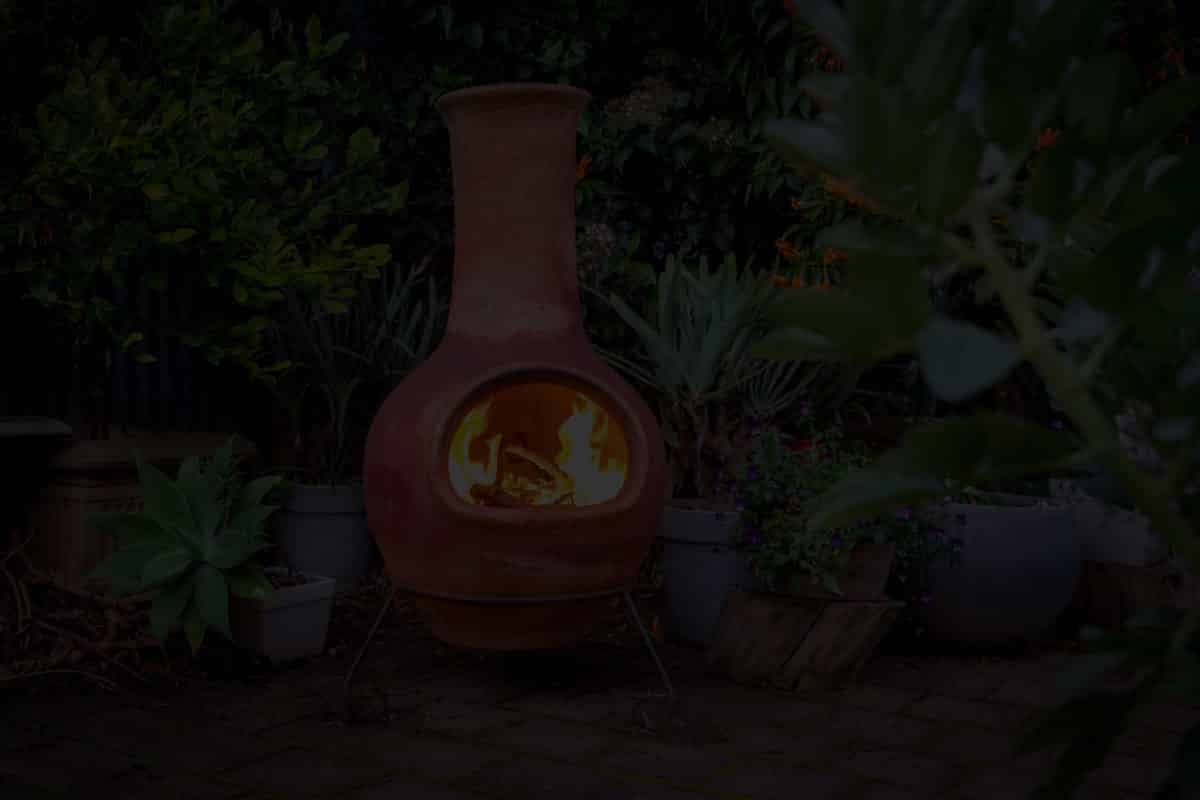
– the traditional option, clay chimineas soak up the heat of the fire and radiate it really well. They’re made of thick clay, are heavy and should be protected from bad weather, particularly in winter. They don’t usually come with grills, but you can buy removable grills and cooking accessories from us if you’d like to use your clay chiminea for cooking. Plus, clay chimineas should always be ‘cured’ before use.
How do I cure my chiminea?
Curing a chiminea before you use it prevents thermal shock, which manifests itself as tiny hairline cracks caused by a sudden increase in temperature. They might not be immediately visible, but they’ll enlarge over time and shorten the chiminea’s lifespan. Here’s how to cure your chiminea:
- Put a layer of pumice stone in the bottom of your chiminea
- Build a small paper-only fire
- Let the fire burn out then wait until the ashes cool completely
- Build a small fire using wood and let the clay sides of the chiminea gradually heat up
- Repeat this a couple of times, letting the chiminea cool each time, and your new chiminea is ready to use
How big is extra large?
Our biggest chiminea, an extremely impressive beast, stands 143cm high including the stand or legs. The diameter measurements are always taken from the widest part of the bowl.
What can I burn in my chiminea?
- Chimineas are a great way to dispose of small quantities of dry garden or household waste. As well as twigs, sticks and dried organic material you can burn egg cartons, newspaper and junk mail
- Don’t burn plastics. They can be toxic and dangerous as well as horribly smelly and smoky
- Wood is great for burning. Cedar, pine, apple and hickory are a some of the most popular chiminea woods, but whatever wood you burn you should always make sure it hasn’t been treated
Otherwise, you can choose from our range of sustainable and recycled fuel. Make sure you buy the right sort of fuel for your chiminea. For example, charcoal releases too much heat for clay chimineas, but it’s perfectly fine for cast iron or steel chimineas.
We also stock the brilliant Logmaker, seriously eco-friendly and perfect for making handy logs from everyday garden and household waste.
You sell a lot of Mexican chimineas. Why Mexican?
Chimineas originated in Central America as outdoor hearths made from mud and clay. They were used for baking bread and providing warmth for families, very convenient and simple since if one developed a crack you could fix it simply by plastering more clay over the damage.
Over the millennia the design and shape were refined, and chimineas were painted and embellished with patterns and designs. We stock chimineas inspired by traditional Mexican décor, with the same lovely shape and exotic artwork inspired by Aztec, Mayan and Mexican art.
I’ve read about terracotta chimineas. Why don’t you stock them?
Terracotta chimineas are exactly the same as clay chimineas, just with another name.
What if my chiminea arrives damaged?
We will send out a replacement free of charge for any damages that happen during transit. Take a look at our delivery and returns policy for full details.